Performer's Review: Don't Fuck with the Gods
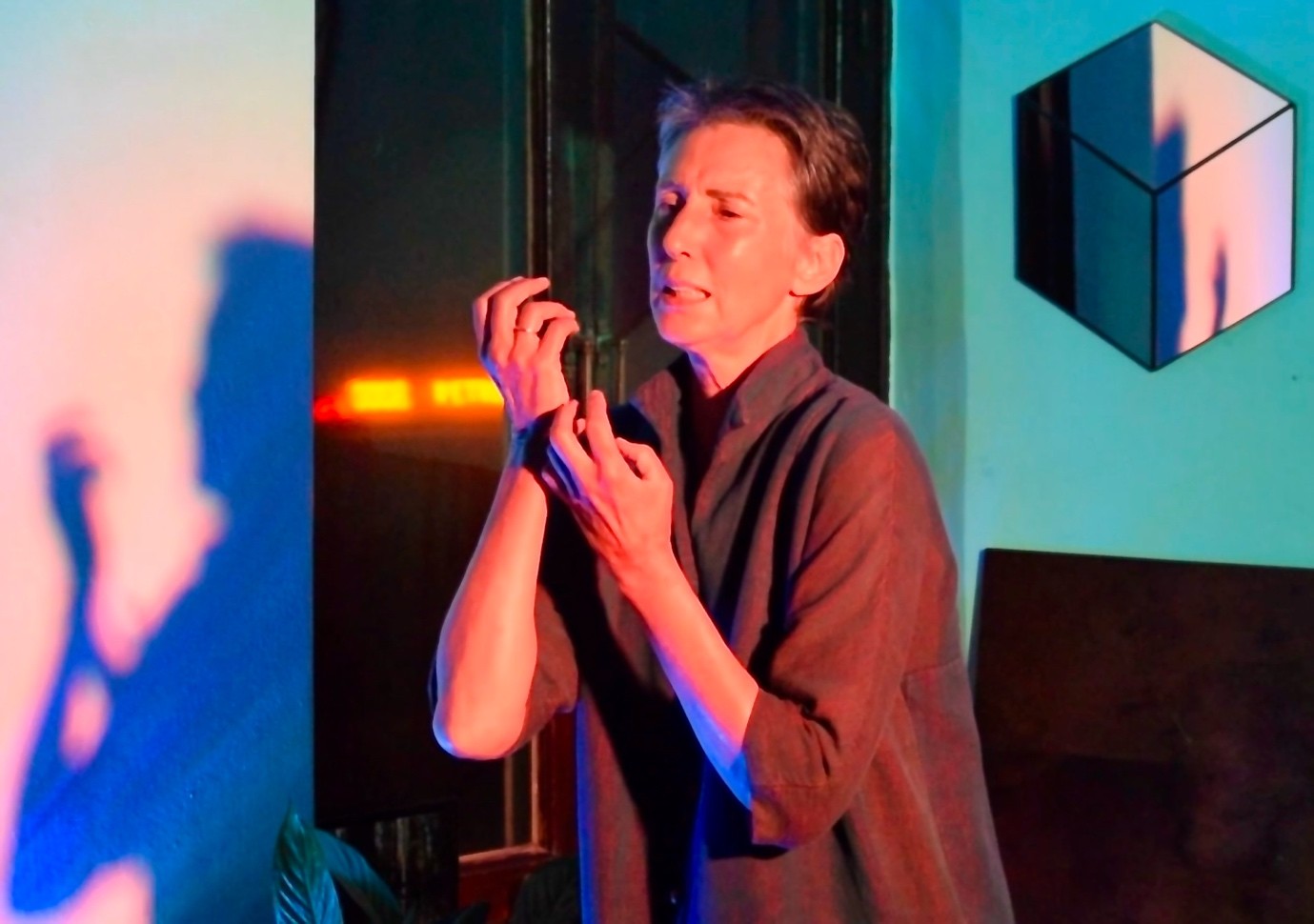
From the outset, this performance was an undertaking held by one persistent ambiguity: how would I qualify to speak on behalf of the aged?
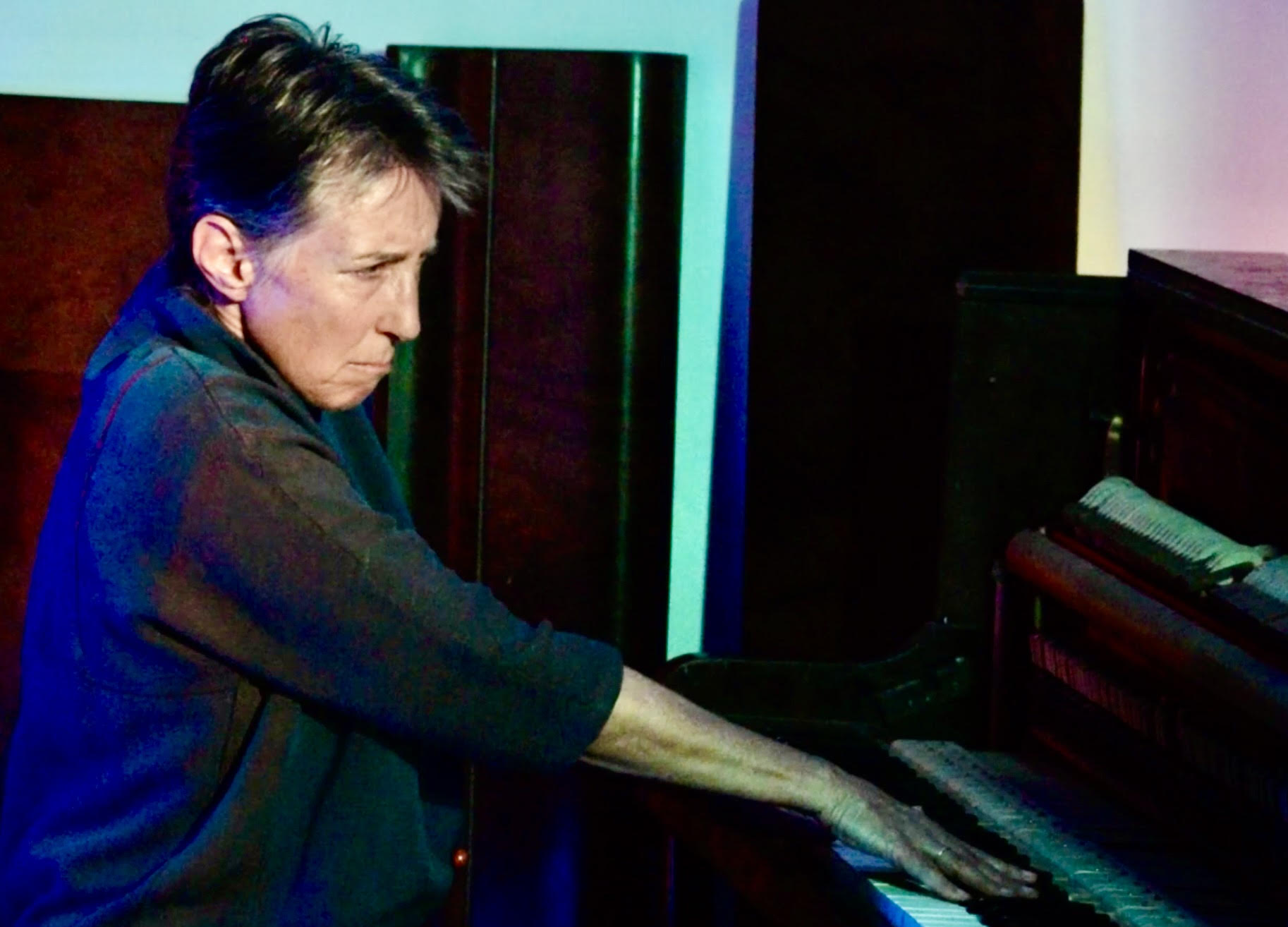
To imagine an event I named Radical Ageing at the Edge – the literalness of the title itself – and to commit myself to turning up at The Commons and delivering, performing, something, became a four-week-long trampling through ideas and convictions, through their erasures and doubts. It was a period of frequent catharses at the piano, a rigorous physical regime, and blessedly, a rhythmic visitation of the garden: harvesting, seeding, compost-making, fermentation and vermiculture.
These practices became entangled with the performance-in-the-making. The garden, the piano, the body, the ageing self: ultimately each became a site of discomfiture, absorbing and metabolising the many hauntings – hauntologies – that emanated from the task.
What was I doing when I claimed the right to speak of ageing? What kind of authority could possibly come from a body that was itself ageing, composting, remembering, relinquishing and becoming otherwise – inevitably refuting the object of the aged – yet where embodied age was largely entertained as an interest, a performative curiosity?
Perhaps the work began precisely there – not in knowing what it meant to be aged, but in entering the pretence-entanglement of it, even transgressing some inherent dignity of ageing itself. To perform ageing at the edge was a becoming, to inhabit a threshold with discomfiture: between a quantified authority (age 71) and doubt, vitality and righteousness, cultivation and decomposition of my certainty as a performer, the living and the already-haunting dead. And then the realm of the gods, where those who can truly speak of trespassing the great divide.
And perhaps this is where the gods entered, I now admit.
Don’t fuck with the gods.
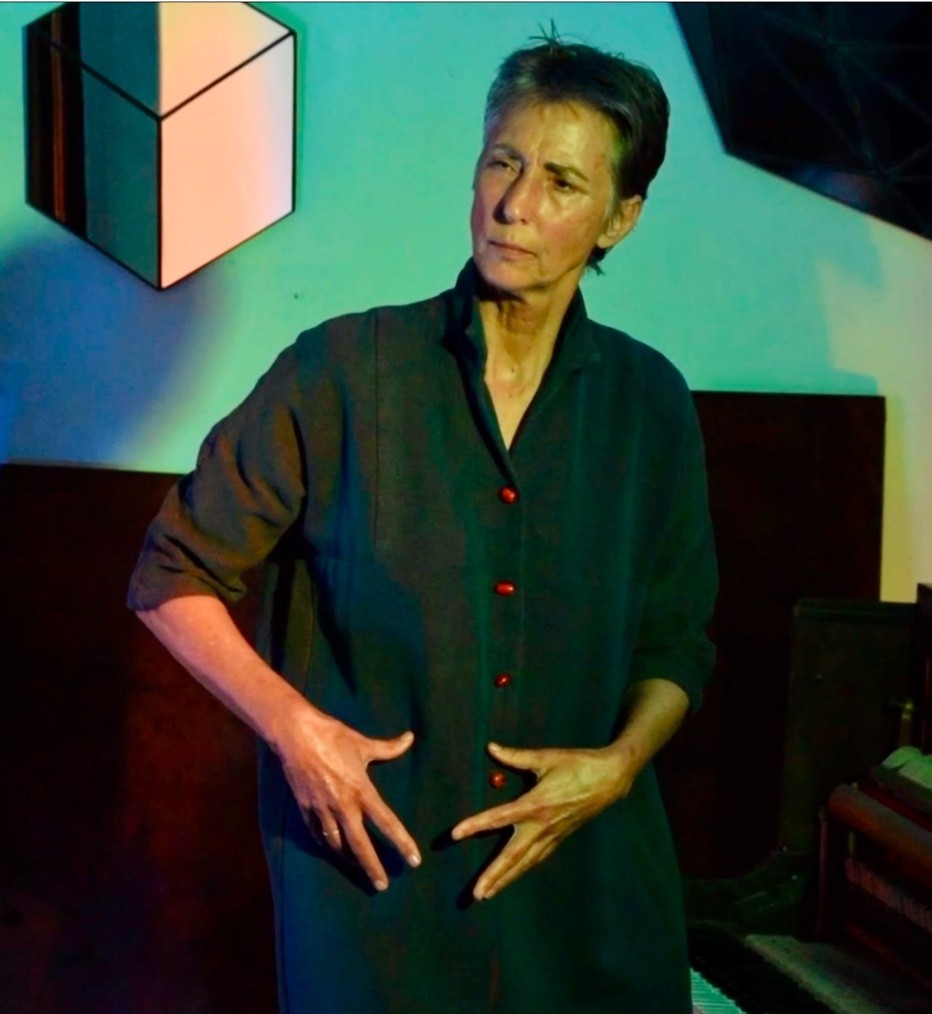
The closest I came to authentic elderhood was through narrations involving younger people: being in their presence under precarious conditions, amongst dancers all younger than myself, and being transported – sometimes through the physical contact of dance, sometimes through witnessing a dancer ceremonially enact the plight of an ageing woman in an ageist world.
These encounters opened a field of tenderness, courage, profound trust and surrender towards the young.
Let me address those moments when I move with young dancers, touching their bodies in highly informed, deeply sensed contact. I have written much about this practice on this website. What I have not yet authorised myself to write about are the moments when our movement takes me close to their feet: when I have a view of young feet and the possibility of touching them feels like a sacred act.
This is where the often-emerging realities of young people of our time enter the field for me. Requiem-to-Come makes sense to me here.
I mourn the loss of socio-political structures that might give young people a sense of safety, allowing them to unfold within a world of reasonable meaning, a world capable of generating a sense of future.
I mourn the hostage-taking of young lives by social media, which deprives young people of the possibility of resting into another kind of warmth of being and mattering – one that might allow creativity to emerge as a way of mattering in the physical world.
I mourn the sense of meaninglessness I often witness among young people in the towns I travel through.
I mourn the capturing of the world by artificiality – called intelligence – that threatens to rob young people of work: work that gives a sense of meaning, of being, of mattering.
I mourn that young professionals increasingly have to navigate the security of a job alongside the sense that doing so may involve compromising their moral convictions. This throws the beauty of guardianship, mentorship and guidance by older people into disarray, to the loss of both generations.
And when I allow these realities to enter me while I am close to their feet – feet that have become a choreographic icon in my work with them – I allow myself an affective overwhelm.
The release of this sorrow into a world that could have been different becomes, for me, a way of existing with them: an act of solidarity, a wordless merging, in which I feel myself in their position and, at the same time, feel their presence within me.
Perhaps this is what the feet hold for me. They are not merely feet. They are young bodies carrying themselves into a future I cannot know, a future that feels increasingly precarious. To come close to them, to touch them, is therefore not an act of possession or protection, but a moment of profound recognition.
This moment is immensely dear to me. I want it to remain embodied – hopefully never to be lost.
Here is the video clip of this episode of the performance.
And yet I felt myself on a slippery slope, moving towards the edge of something I knew nothing about, while simultaneously showing up as the one who would stand for it anyway. I felt the game of fate in my performance, and the danger in ceasing, as much as pursuing the performance.
There was something almost absurd in this position: to claim to speak of elderhood while being unable to locate the words; to stand before an audience with the authority of an ageing body while feeling profoundly uncertain about what, exactly, that body could claim to know.
I realise that I do not qualify to speak for the elders. Nothing of what I imagine elderhood to be belongs unequivocally to me.
I admit this even while I carry the status of an elder within my Mjoli clan. But that is not what I mean here.
I cannot claim to ontologically feel like an elder myself. Perhaps this is the most unsettling discovery of the performance: that age does not necessarily deliver elderhood, and that being recognised as an elder does not mean that one inhabits the ontology of elderhood.
So who, then, was I to speak for?
What I can stand for, however, is this: the re-membering of a younger dancer’s honouring of the older woman, and my own weeping in the presence of the figure she brought before me.
Here, something shifted. I was no longer attempting to represent elderhood. I was witnessing it through another – younger – body. I was moved by the tenderness with which a younger dancer could honour an older woman, and by the force of that encounter – its grief, its dignity, its vulnerability. This story brought me into contact with something far more visceral: the anguish and fury of an ageing person neglected, diminished and rendered increasingly invisible by society.
Here is a clip of the narration of the dancer – the one I warned the audience as: there is nothing as dangerous as a serious dancer – who came to dance me the body of the older woman engulfed in societal ageism. And we wept.